Video Vault
Home Buyers Blindsided By Something TERRIBLE Happening in East Coast Florida
Seven things that catch east-coast Florida buyers off guard, starting with prices up roughly 40% since COVID, and more than that in some submarkets.
Key points
- Prices are up about 40% over COVID levels, and further in some markets
- Seven specific factors to understand before committing to a purchase
- Drawn from 25 years of relocating clients to the east coast
Full transcript
What Sally covers, in her own words.
Transcribed from the video and lightly corrected for readability.
If you're interested in the East Coast of Florida, you need to be armed ready with understanding the seven items we're going to go over that you need to understand before you commit to a purchase here on the East Coast of Florida. I'm Sally Daley from the Daley Group at Douglas Elliman. I've been helping clients for 25 years relocate here and I can help you understand what you need to know to make your Florida home a reality. So, let's dive right into it. Let's start with number one, the most obvious. Prices are up 40% over COVID.
In some markets even more than that. So, what does that mean? It means you need to do your homework when you're looking at properties. You can find parts of the East Coast of Florida that are more competitive. It goes back down to what we've talked about before about being a buyer. Talk to your trusted advisor and say, "What are the average prices in this neighborhood now?" And understand what the average days on market are in those communities. Why do I say that? The longer a home is on the market, the more you may be able to have influence over your final deal.
So, if the average days on market is 140 to 160 days, don't be thinking you can go after a house that's just been listed or it's on the market 30 days and you're going to be able to get a screaming deal. You're probably not going to. So, understand your acquisition costs is more than it used to be. Confirm with your trusted advisor, like me or somebody I can help you connect with, and say, "Okay. Within this market, what is the average day on market and what's the average list to sell ratio?
In other words, what is it listed for? What does it sell for? What is that gap or what is the discount?" So, number one, cost to buy is going to cost you more than it would have in the past. And prices are relatively stable. So, keep that in mind. Number two, and this is really important. I think a lot of you understand this now cuz it's gotten a lot of press. Roof, roof, roof. Your roof will either make it easy to buy and insure or it will make it difficult to buy and insure.
What do I mean by that? About 5 years ago, all the insurance companies broadly that write in the state of Florida said, "We need to limit our risk and our exposure to clients." Well, what's the number one reason? Your roof. The roof is the single biggest determinator of how your house does in the event of a casualty event, like a storm, and how it does in high winds. Around 5 years ago, a lot of the insurance companies started saying, "Even if you're leak-free, no matter if you're standing seam, concrete tile, barrel concrete tile, or traditional asphalt shingle, if you're more than 15 years old, no thank you and we're not going to insure you." So, that means if you're looking at a home, one of the very first questions you need to understand is, "What is the age of your roof?" If you don't know how to find that out, work with your trusted real estate advisor who can help you do that.
Permit searches, etc. And always do your own due diligence, by the way. And sellers, hear me and hear me well. Nobody wants your roof credit. They want you to do the roof or they want something from a licensed roofer saying that there's, you know, more than 5 years left in it that they can show to their underwriter. You also need to understand, are you in a community where they have rules about what your materials are? So, understand the effect that your roof and your roof age has on cost of ownership and what the insurance is going to be like.
Number three, insurance sticker shock. Yes, prices have accelerated. Even if you're okay with a higher number, you need to understand from an insurance perspective, the higher the value of the house, the higher the cost of insurance. And if you want insurance or you need to take it cuz you're planning on getting a mortgage, you need to understand what that cost is. Please take my advice. Do not fall in love with a house, negotiate a contract, and then go shopping for insurance. Because what if it's a huge number and it throws your numbers out of whack and you don't qualify for your mortgage?
Or you're bummed out and it means I can't afford to pay this for the house cuz I need to put a roof on it in order to get my insurance cheaper. Understand not only the cost to buy that house, but what the likely cost to own that house is. And a big part of that is insurance. When you do your home inspection, they will actually, depending on the age of the house, do at a minimum what's called a wind mitigation inspection, which shows how the house is going to do in the advent of storms, windows, glass, roof.
If over 30 years old, they'll also do something called a four-point, looking at the four points of the house, roof, AC, electric, plumbing. They're looking at it from a risk perspective. The more protection you have, the more discounts you automatically get. Then, of course, is what we call self-insurance that a lot of people do. It means I don't have a mortgage, so I don't need to take it. But you need to have the constitution to take the risk of no insurance coverage in the event something happens to the house. So, insurance is going to be comprised of two elements in the state of Florida.
One is going to be your traditional homeowners that most of you are familiar with. The more expensive part is called windstorm. And that's actually a separate part the policy and that's exactly what it sounds like. Wind damage, the roof peels off, you have damages a result, it pays. What I want you to understand is it's a percentage. Wind in particular is going to be a percent of the total value of the structure. So, when you get an insurance quote, ask for a 2% deductible quote and a 5% deductible quote. And you decide, do I want the smaller deductible but a bigger premium every year or am I willing to accept the risk of a bigger deductible at 5%, which gets me every year a cheaper policy.
Insurance is a huge part of your due diligence for understanding the cost of ownership. Now, let's talk about property tax. We talked about insurance and deductibles, three and four. In Florida, what you need to understand is we have no estate tax and no income tax. So, how are they going to generate revenue? Well, one of the ways they generate revenue is every time title transfers, whether it's a condominium, a duplex, a house, your assessment is reassessed for taxes. What does that mean? When you're looking at houses, I don't want you to worry about two things or don't rely upon two things as indicative of what your costs were going to be.
Number one, it doesn't matter what the current homeowner pays for insurance. You don't know if they have good insurance, bad insurance, crazy coverage that you don't need. Don't rely upon as we just said, get your own quote. Number two, you may not rely upon what they're currently paying for taxes. If you understand when that deed is recorded and your new sales price is recorded, reassessment will occur. Well, Sally, how do you figure that out? Assume that your new purchase price, let's say you spend $10 for a house, your new tax bill is going to vary county by county, so make sure you find out the mill rate in the county in which you're looking.
In Vero, we're telling everybody about 1.3, 1.5% of your purchase price is going to be your new tax bill. So, make sure you understand that before you contemplate buying a property. And let's talk about if you're going to keep a place in a high-tax state that you are leaving, California, New York, New Jersey, Connecticut, need to be mindful that the tax guys in those states are sorry to be losing revenue from your tax bills. So, taxes are a thing. And at the moment, I would say it's actually even more of an issue because insurance has abated a little bit.
So, the question is, Governor DeSantis, what are we going to do for taxes to make it still that folks want to come establish residency in Florida a thing? So, make sure you're aware of it and do your math before you pursue a specific house. Number six, seawalls, docks, erosion in general. Well, if you're fortunate enough to be looking at something on the ocean or the river, hooray, good for you, lucky you. But it's a whole 'nother set of due diligence that you need to be mindful of because in most instances, if it's a single-family home, you will own the dock, the seawall, and worry about erosion if it's a thing.
So, those are expensive matters to take care of. Now, let's talk about erosion. Erosion in general isn't really such a thing in the Vero Beach area. Part of it is a function of your base elevation and that's something you need to understand. And you can ask the seller, if they have one, to show the base elevation or if you're in contract, you can commission a survey and ask the surveyor to do what's called an elevation certificate to show you how far above the base elevation are you. At the bottom line, at the end of the day, what you're buying is the dirt and all the improvements on it, right?
And you want to make sure if there are appurtenances on there, like docks, seawalls, that you're not going to have Mother Nature literally eroding your property value. And understanding the condition and shape of everything that you're buying. Let's talk about special assessments for a minute. A lot of people hear that word special assessment and they think it means the condo did their reserve study and the structure needs work and everybody's got to pony up 10K to shore up the pool or put on a new roof. That's certainly something that you need to be mindful of if you're buying a condominium in the state of Florida, depending on age and proximity to the water.
But, there are actually other kinds of special assessments that could happen, too, even if you're not in a homeowners association. Well, in Vero Beach, for example, we have the Indian River Lagoon Estuary that we love, and there is a real will to keep septics from leaching pollutants into that water to clean it up and have it be as as healthy as possible and have it to be dynamic and clean. So, how are we doing that? Well, what we're actually doing is the city health department mapped out where all of the septic tanks were.
We do have some in Florida, and they said to all these folks within the designated area, they all got a notice that said, "Within the state by 2030, we want you to have a pump attached to your septic called a step pump septic treatment effluent pump that brings you all the way out, takes your septic material, and connects it to the city sewer, and keeps it out of the river. It's a good thing. Now, what does that mean? Well, depending on where you are, the way in Vero, the way the noticing has been filed, by 2030 or if title gets transferred, so the earlier of.
So, sometimes there are those kinds of assessments, or natural gas is coming to a community. So, sometimes there are things that are not necessarily specific to the actual neighborhood, but the municipality at large, and they're important things for you to know about cuz they can be in it they can be expensive, and it's something to negotiate when you're negotiating your transaction so you can understand it and have no bad surprises after closing. So, I'm a planner. What's the plan? Understand the components that go into buying and owning properties that are interesting to you.
Is there an association? Is there a condo board? Make sure you look at the financials. Make sure you understand if the reserve studies have been done. Make sure you understand if there's going to be assessments that are levied so you can negotiate. Get an insurance quote like we talked about before. Don't rely upon what the current owner pays in property taxes or insurance cuz it will change when a new buyer comes in, and if that's you, you want to be armed and ready and understand. Do your due diligence ahead of time, and either DQ houses whose ownership is more than you're comfortable with, or it will help you assess your strategy for acquisition and say, "Okay, I'm interested, but I can only pay X, and if the seller is willing to contribute Y, I can make it happen." It makes you a more informed buyer so you understand the cost to buy and own the house of your dreams.
I'm Sally Daley. You have any questions, write to me, DM me through our contact form, and I can help you sort it all out cuz every home is slightly different, and I can help you figure it out. Thanks for watching.
Keep watching
More from the Video Vault.
 13:36
13:36The Difference Between Living in Vero vs. Jupiter vs. Naples
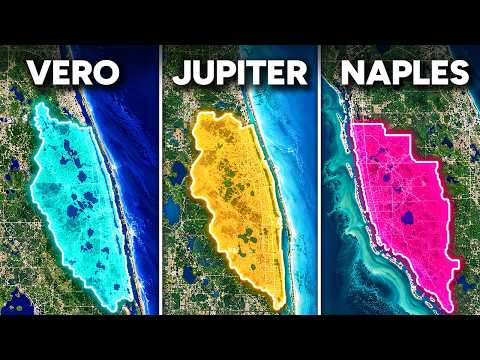
Three Florida towns that buyers treat as interchangeable, priced against each other. Sally puts the same million dollars, and then two million, against a real property in each of Vero Beach, Jupiter and Naples, including what the monthly maintenance actually costs and how far the beach really is. Prices, ages and market conditions are as she gave them in September 2026.
 13:29
13:29Why So Many People Moving to East Coast Florida Choose Vero Beach
Why buyers who start out looking at Boca, Palm Beach and Miami are quietly landing in Vero Beach instead. Sally names the three drivers (congestion, water and golf, and bang for your buck) and is straight about the one real friction, which is getting here by air. Prices, club availability and flight routes are as she gave them in September 2026.
 15:04
15:04Comparing Where To Live on Florida’s East Coast
A quadrant-by-quadrant read of Florida’s east coast (North Florida, the Space Coast, the Treasure Coast and South Florida) and what the same budget actually buys in each. Sally puts numbers on every band, explains why Vero prices differently from its neighbours, and ends on the ownership costs that decide whether a house is affordable at all. Prices are as she gave them in September 2026.
Questions the video didn't answer?
A private consultation gives you the same market intelligence, applied directly to your decision.